
Supplement forms include capsules, tablets, powders, gummies and liquids. To compare them fairly, check the declared active amount and serving basis, then examine other ingredients, dietary information, testing and cost; the format alone cannot tell you which product is better.
This guide separates physical format from ingredient form and shows how each changes the label-reading task. It uses the formats currently recorded in our UK comparisons, without assuming every category offers every option.
Which formats are available in your category?
Choose a supplement and use its Format filter alongside the ingredient and serving information.
We may earn a commission if you buy through our links. How we stay independent.
In this guide
What do supplement forms describe?
A supplement's format is its physical presentation, such as a tablet or powder. Its ingredient form is the named substance supplying the nutrient, such as a particular magnesium compound. These are different characteristics: two capsules can contain different ingredient forms, and the same ingredient can appear in different formats.
The Food Standards Agency lists several physical forms in its supplement guidance. Use that distinction when reading marketing language: a claim about a capsule shell does not establish the identity or quantity of the contents. Likewise, the name of a nutrient does not describe all the other ingredients.
Our guide to reading a supplement label explains the order of checks. Keep format, active ingredient, declared amount and serving basis in separate notes so that one detail does not obscure another.
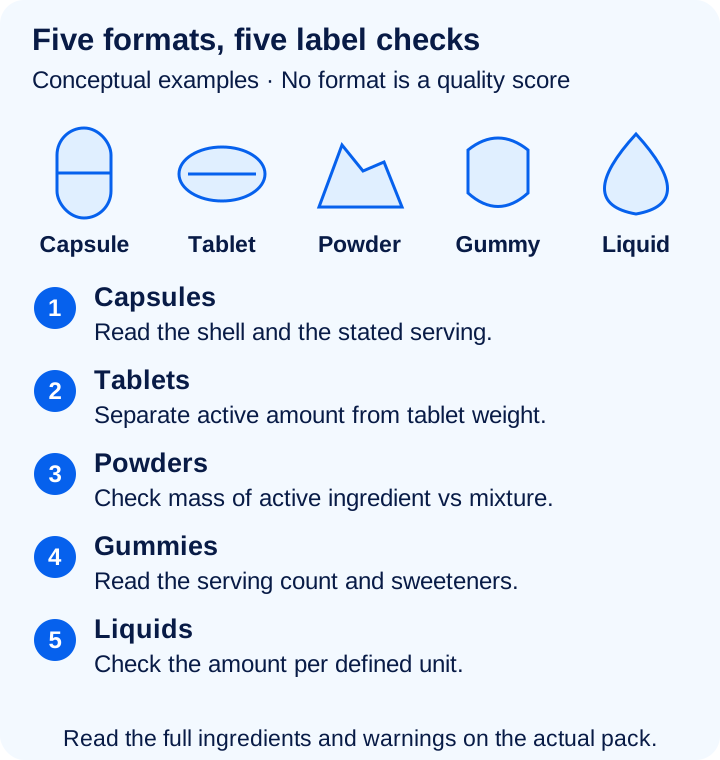
How do capsules and tablets differ for comparison?
Capsules
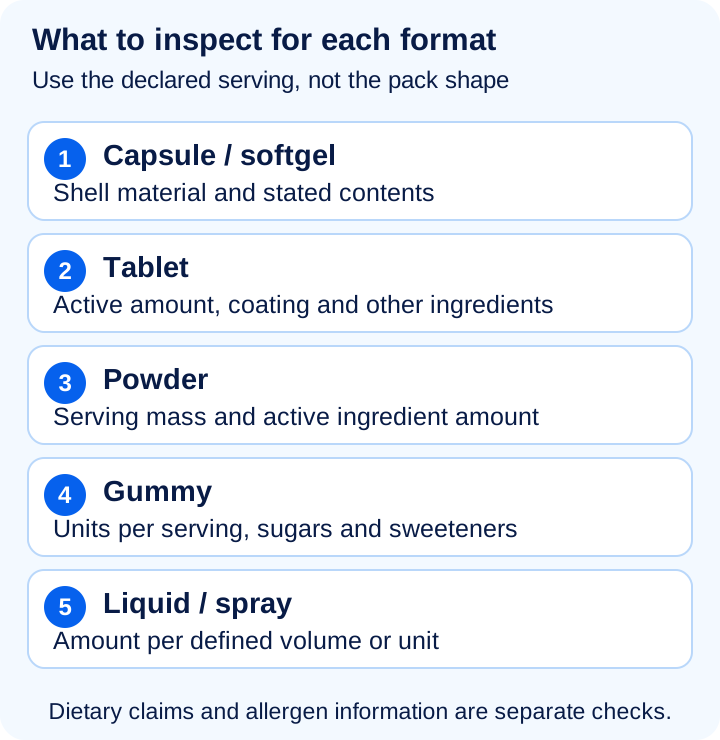
Read the declared amount per capsule and per stated serving. Check the shell material and any ingredients listed alongside the main active substance.
Tablets
Check the nutrient amount separately from tablet weight. Read coatings and other ingredients rather than assuming that all of the tablet is the named nutrient.
Both formats are discrete units, which can make the pack count easy to identify. That count is still not necessarily the number of daily servings. A label may express its nutrient information for a stated group of units rather than one tablet or capsule.
Softgels need the same care. Record the shell and the stated contents separately, including a carrier oil where it is disclosed. A softgel shape does not by itself establish vegetarian or vegan status. Use the ingredient information and the manufacturer's explicit dietary statement.
What changes with powders, gummies and liquids?
| Format | Useful comparison detail | Question to resolve |
|---|---|---|
| Powder | Declared serving mass and active amount within it | Is the figure for the active ingredient or the whole flavoured mixture? |
| Gummy | Number of gummies in the declared serving | Which sweeteners, sugars and gelling ingredients are listed? |
| Liquid | Active amount per stated volume or defined unit | Is the label expressed per mL, drop or another specified measure? |
| Spray | Amount per stated number of sprays | Does the declared daily serving use the same number? |
These formats can have different practical handling requirements. For comparison, the important point is to use the label's defined unit rather than inventing one. A scoop description without a clear mass, or a liquid listing without a clear quantity basis, leaves the calculation uncertain.
For gummies, do not infer nutritional equivalence from appearance or flavour. Read the amount in the stated serving and the full ingredient list. For liquids, check the label's storage information and any after-opening instruction; the format alone does not tell you what applies to a particular product.
How does format change the serving maths?
Find the manufacturer's declared daily serving
Identify the number of units, mass or volume to which the information relates. This is the comparison basis, not a personal recommendation.
Read the active amount on that basis
Use the nutrient or active-substance figure, not total tablet weight or total flavoured powder. Check the unit beside the number.
Work out servings per container
Use compatible pack and serving quantities. If the label is ambiguous or offers a range without a clear basis, keep the uncertainty visible instead of selecting a convenient assumption.
Compare daily cost alongside content
Divide the recorded pack price by the supported number of daily servings. Then compare the active amount too: identical daily prices do not imply identical formulations.
Compare magnesium formats and daily costs
These live cards are selected by recorded daily price. Open the analysis to inspect serving information, ingredient form and testing before interpreting the cost.
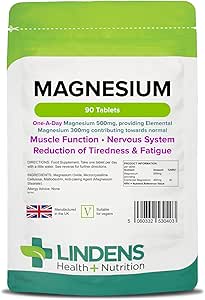 Lindens Magnesium 500 mg OxideView
 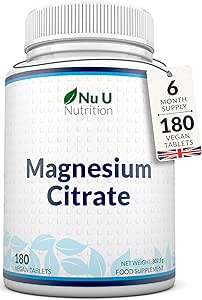 Nu U Nutrition Magnesium Citrate 200 mgView
 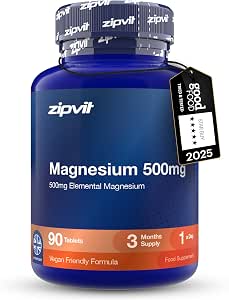 Zipvit Magnesium 500 mgView
 We may earn a commission if you buy through our links. How we stay independent.
What should you check in other ingredients?
Excipients are formulation ingredients included alongside the main active substance. Depending on the product, they can serve roles such as forming a shell, carrying an ingredient or helping the product hold together. 'Other ingredients' is a label category to read, not an automatic reason to favour or reject a product.
Look for explicitly disclosed flavourings, sweeteners, coatings and shell materials. A shorter list does not on its own establish a better formulation, just as a longer list does not explain why each component is present. Where the function or source matters to your comparison, seek clarification rather than guessing.
The Food Standards Agency distinguishes vegan labelling from allergen-free claims. A vegan statement does not rule out cross-contact with allergens. Read the allergen declaration and precautionary wording separately, even where the pack makes a clear dietary claim.
Does one format always absorb better?
A universal ranking is not supported simply by the words capsule, tablet or liquid. A published systematic review of vitamin D vehicles examined formulation differences and highlighted limits in comparing studies, including ingredient form and participants' starting status. It does not provide a league table for every supplement format.
Keep a specific formulation study attached to the ingredient and comparison it actually examined. Do not extend it to every product sharing the same shape. If an advertisement claims better absorption, look for the exact formulation, comparator and measured outcome before applying the statement to a different listing.
Format does not assess personal suitability
If you need advice about a supplement alongside medicines or have concerns about suitability, speak to a pharmacist or doctor. A format filter is a browsing aid, not an individual assessment.
Which formats can you compare on this site?
At this guide's review, the UK Magnesium comparison includes capsule and tablet formats. The Creatine comparison also includes powders. The Vitamin D comparison offers a wider format filter, including gummies, liquids, softgels and sprays. Use the current filters because the product selection can change.
Our comparison methodology explains why category-specific amounts matter. Start within a category, choose the formats you want to inspect and keep testing evidence visible. A difference in daily price may be meaningful, but only when the underlying serving information is clear.
Compare formats without losing the details
- Separate physical format from ingredient form.
- Match the declared serving basis and active amount.
- Check shells, carriers, sweeteners and other ingredients.
- Read dietary and allergen information separately.
- Compare daily cost and testing without assuming a format winner.
Frequently asked questions
Are capsules better than tablets?
Neither description establishes a universal winner. Compare the actual ingredient form, amount, declared serving, other ingredients and testing evidence. Capsules and tablets can differ in those details within the same category. Choose the comparison criteria first rather than using the physical format as a shortcut for overall quality.
Are gummies as good as capsules?
The format alone cannot establish equivalence. Compare the active amount in each product's declared serving, then read sweeteners, gelling ingredients, dietary information and testing. A gummy count and capsule count are not necessarily the same serving basis. Judge the disclosed formulations rather than their appearance or flavour.
What are excipients?
They are formulation ingredients included alongside the main active substance, with roles that can include carrying ingredients or forming the product. Check the actual list and any relevant dietary information. Their presence is not automatically a quality problem, and a short ingredient list is not proof of superior testing or formulation.
Do powders cost less per serving?
That depends on the selected product, pack price and supported number of servings. A large tub is not enough to establish a lower daily cost. Compare the same active ingredient and serving basis, and check whether the stated mass describes the active ingredient or a mixture containing other ingredients.
How do I compare supplements across forms?
Start with the declared daily serving, find the active amount on that basis and calculate the supported number of servings per pack. Then compare daily cost, ingredient form, other ingredients and testing. Keep unclear label information visible rather than inventing a serving quantity to make the arithmetic work.
Choose a category, then compare the formulation
Use current format filters and product analysis to examine the details behind each pack.
We may earn a commission if you buy through our links. How we stay independent.