The US version of The Supplement Compare is currently being prepared and will be available soon.
Stronger today. Brighter tomorrow.Evidence. Options. A healthier you.
Vitamin D Supplements
Compare UK vitamin D supplements by D2, D3 or D3 + K2, daily dose in IU and µg, price and testing status. Find lower-dose and vegan options, then read the UK guidance below.
We may earn a commission from qualifying purchases at no extra cost to you. Affiliate relationships never determine our scores or rankings.
Displayed points and weights are rounded; the total uses unrounded weights. Pending dimensions are excluded. Provisional scores may change after review.
Testing evidence
Evidence status
Verified independent evidence
Manufacturer statement
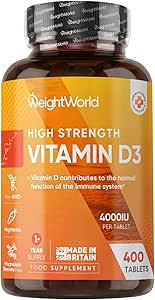
Attached to test report no. 26C22329 ... TESTING COMPLIANCE CERTIFICATE ... Sample description: WEIGHTWORLD VITAMIN D3 40001U 400 TABLETS - BATCH CODE: 429462 ... The analyzed sample is compliant ... Vitamin D3 100 μg/tablet ...
Displayed points and weights are rounded; the total uses unrounded weights. Pending dimensions are excluded. Provisional scores may change after review.
Testing evidence
Evidence status
Verified independent evidence
Manufacturer statement
Attached to test report no. 26C22329 ... TESTING COMPLIANCE CERTIFICATE ... Sample description: WEIGHTWORLD VITAMIN D3 40001U 400 TABLETS - BATCH CODE: 429462 ... The analyzed sample is compliant ... Vitamin D3 100 μg/tablet ...
Displayed points and weights are rounded; the total uses unrounded weights. Pending dimensions are excluded. Provisional scores may change after review.
Testing evidence
Evidence status
Testing claimed
Manufacturer statement
Nutravita’s product page says "Laboratory tested products"; the Ingredients page says ingredients go through "strict testing" and that "the testing is done in-house at the manufacturing site." I did not find any independently verifiable third-party lab report or certification for this specific product, and the only registry result I found was NSF listings for other brands/products, not Nutravita Vitamin D3 Drops.
Adult UK comparison: 400 IU (10µg) is the routine supplement amount in NHS guidance. 4,000 IU (100µg) is the adult upper limit, not a target. Badges compare the recorded daily serving with these reference amounts; they are not a studied-range verdict or personal recommendation. Read the dose guide ↓
Displayed points and weights are rounded; the total uses unrounded weights. Pending dimensions are excluded. Provisional scores may change after review.
Nutrasource registry page states: "IGEN™ Certified" and "This product has PASSED because it does not contain detectable amounts of genetically engineered GMO proteins and genes included in the IGEN™ testing panel."
Displayed points and weights are rounded; the total uses unrounded weights. Pending dimensions are excluded. Provisional scores may change after review.
Nutravita’s product page says "Laboratory tested products"; the Ingredients page says ingredients go through "strict testing" and that "the testing is done in-house at the manufacturing site." I did not find any independently verifiable third-party lab report or certification for this specific product, and the only registry result I found was NSF listings for other brands/products, not Nutravita Vitamin D3 Drops.
Displayed points and weights are rounded; the total uses unrounded weights. Pending dimensions are excluded. Provisional scores may change after review.
Nutravita’s Ingredients page says: “any ingredient selected goes through strict testing to make sure it complies with EU standards” and “The testing is done in-house at the manufacturing site…”; the product page also says “Laboratory tested products.”
Displayed points and weights are rounded; the total uses unrounded weights. Pending dimensions are excluded. Provisional scores may change after review.
Manufacturer page says: "Third-party lab tested — View Certificate" and "All our products undergo thorough research and testing before they hit the market."
Displayed points and weights are rounded; the total uses unrounded weights. Pending dimensions are excluded. Provisional scores may change after review.
Manufacturer site has a general claim of an "Update on Third Party Testing" and says "we have the evidence to prove it" plus "an independent third-party lab retested the exact same batch" — but this is on a different product (Ashwagandha/Milk Thistle), not this Vitamin D 1000iu product, and I did not find an independently verifiable testing/certification page for the Vitamin D product itself.
Displayed points and weights are rounded; the total uses unrounded weights. Pending dimensions are excluded. Provisional scores may change after review.
Manufacturer site says: "We work tirelessly to identify and test the supplements that really work" and "we ensure every product is created using the highest quality ingredients..." but I found no independently verifiable COA, lab report, or third-party certification for this specific Vitamin D3 1000 IU product.
Displayed points and weights are rounded; the total uses unrounded weights. Pending dimensions are excluded. Provisional scores may change after review.
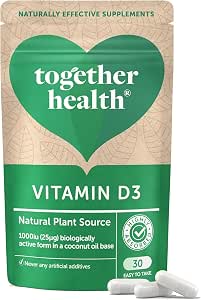
Certificate of Analysis for Vitamin D3, Product Code TH-VD3-30, Batch Number 56635: 'Vitamin D3 25μg/1000iu Conforms' and 'Analysis performed by a 3rd party lab, accredited by UKAS'
Displayed points and weights are rounded; the total uses unrounded weights. Pending dimensions are excluded. Provisional scores may change after review.
Batch certificate states: "The following production batch has been tested by the laboratories of LGC and meets the requirements and standards of Informed Sport." Product: "Healthspan Elite 4,000iu Vitamin D3"; batch 140254.
Laboratory
Not recorded
Certification body
Not recorded
Batch
Not recorded
Batch-specific report
Not established in this record
Report date
Not recorded
Evidence checked
2026-09-14 11:36:08
Why this score?
Testing & evidence
3/25
Ingredient/formulation quality
15/20
Value
11/20
Dose transparency
14/15
Manufacturer transparency
6/10
Label/ingredient transparency
9/10
Displayed points and weights are rounded; the total uses unrounded weights. Pending dimensions are excluded. Provisional scores may change after review.
Displayed points and weights are rounded; the total uses unrounded weights. Pending dimensions are excluded. Provisional scores may change after review.
Veganicity’s Ethical page says: “100% Vegan Society Registered” and “every Veganicity product has been registered with the Society before being made available for purchase.” This is a registration/ethical claim, not an independently verified purity/potency testing claim for this product.
Displayed points and weights are rounded; the total uses unrounded weights. Pending dimensions are excluded. Provisional scores may change after review.
Displayed points and weights are rounded; the total uses unrounded weights. Pending dimensions are excluded. Provisional scores may change after review.
Displayed points and weights are rounded; the total uses unrounded weights. Pending dimensions are excluded. Provisional scores may change after review.
Displayed points and weights are rounded; the total uses unrounded weights. Pending dimensions are excluded. Provisional scores may change after review.
Manufacturer product page states: "Vegan, clinically trialled vitamin D3" and "non-animal tested vitamin K2"; homepage also says "130 Purity Checks" and "Independently BRC certified to the highest AA grade" / "verified by the Soil Association" for some products, but I did not find an independently verifiable certification or COA for this specific product.
Displayed points and weights are rounded; the total uses unrounded weights. Pending dimensions are excluded. Provisional scores may change after review.
Displayed points and weights are rounded; the total uses unrounded weights. Pending dimensions are excluded. Provisional scores may change after review.
Displayed points and weights are rounded; the total uses unrounded weights. Pending dimensions are excluded. Provisional scores may change after review.
Manufacturer site says: "Every Veganicity product proudly bears the insignia of the world-renowned Vegan Society, because every Veganicity product has been registered with the Society before being made available for purchase."
Displayed points and weights are rounded; the total uses unrounded weights. Pending dimensions are excluded. Provisional scores may change after review.
Displayed points and weights are rounded; the total uses unrounded weights. Pending dimensions are excluded. Provisional scores may change after review.
Manufacturer page says: "Absorption Tested by Cardiff University" and "Clinically proven absorption - The nutrients are quickly absorbed through the buccal membrane..."
Displayed points and weights are rounded; the total uses unrounded weights. Pending dimensions are excluded. Provisional scores may change after review.
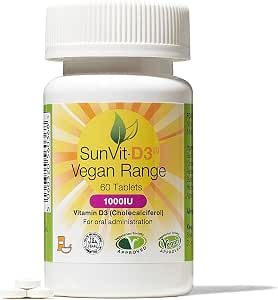
Vegetarian Society registry page lists this product under ACCREDITED PRODUCTS as “SUNVIT-D3 VITAMIN D3 VEGAN 1000IU TABLETS (VEGAN)” / “SUNVIT-D3 VITAMIN D3 1000IU TABLETS.”
Laboratory
Not recorded
Certification body
Not recorded
Batch
Not recorded
Batch-specific report
Not established in this record
Report date
Not recorded
Evidence checked
2026-09-14 11:34:05
Why this score?
Testing & evidence
0/25
Ingredient/formulation quality
15/20
Value
4/20
Dose transparency
14/15
Manufacturer transparency
3/10
Label/ingredient transparency
9/10
Displayed points and weights are rounded; the total uses unrounded weights. Pending dimensions are excluded. Provisional scores may change after review.
Displayed points and weights are rounded; the total uses unrounded weights. Pending dimensions are excluded. Provisional scores may change after review.
Displayed points and weights are rounded; the total uses unrounded weights. Pending dimensions are excluded. Provisional scores may change after review.
Displayed points and weights are rounded; the total uses unrounded weights. Pending dimensions are excluded. Provisional scores may change after review.
Nutrasource registry page states: "IGEN™ Certified" and "This product has PASSED because it does not contain detectable amounts of genetically engineered GMO proteins and genes included in the IGEN™ testing panel."
Displayed points and weights are rounded; the total uses unrounded weights. Pending dimensions are excluded. Provisional scores may change after review.
Nutravita’s product page says "Laboratory tested products"; the Ingredients page says ingredients go through "strict testing" and that "the testing is done in-house at the manufacturing site." I did not find any independently verifiable third-party lab report or certification for this specific product, and the only registry result I found was NSF listings for other brands/products, not Nutravita Vitamin D3 Drops.
Displayed points and weights are rounded; the total uses unrounded weights. Pending dimensions are excluded. Provisional scores may change after review.
Nutravita’s Ingredients page says: “any ingredient selected goes through strict testing to make sure it complies with EU standards” and “The testing is done in-house at the manufacturing site…”; the product page also says “Laboratory tested products.”
Displayed points and weights are rounded; the total uses unrounded weights. Pending dimensions are excluded. Provisional scores may change after review.
Manufacturer page says: "Third-party lab tested — View Certificate" and "All our products undergo thorough research and testing before they hit the market."
Displayed points and weights are rounded; the total uses unrounded weights. Pending dimensions are excluded. Provisional scores may change after review.
Manufacturer site has a general claim of an "Update on Third Party Testing" and says "we have the evidence to prove it" plus "an independent third-party lab retested the exact same batch" — but this is on a different product (Ashwagandha/Milk Thistle), not this Vitamin D 1000iu product, and I did not find an independently verifiable testing/certification page for the Vitamin D product itself.
Displayed points and weights are rounded; the total uses unrounded weights. Pending dimensions are excluded. Provisional scores may change after review.
Manufacturer site says: "We work tirelessly to identify and test the supplements that really work" and "we ensure every product is created using the highest quality ingredients..." but I found no independently verifiable COA, lab report, or third-party certification for this specific Vitamin D3 1000 IU product.
Displayed points and weights are rounded; the total uses unrounded weights. Pending dimensions are excluded. Provisional scores may change after review.
Certificate of Analysis for Vitamin D3, Product Code TH-VD3-30, Batch Number 56635: 'Vitamin D3 25μg/1000iu Conforms' and 'Analysis performed by a 3rd party lab, accredited by UKAS'
Displayed points and weights are rounded; the total uses unrounded weights. Pending dimensions are excluded. Provisional scores may change after review.
Batch certificate states: "The following production batch has been tested by the laboratories of LGC and meets the requirements and standards of Informed Sport." Product: "Healthspan Elite 4,000iu Vitamin D3"; batch 140254.
Displayed points and weights are rounded; the total uses unrounded weights. Pending dimensions are excluded. Provisional scores may change after review.
Displayed points and weights are rounded; the total uses unrounded weights. Pending dimensions are excluded. Provisional scores may change after review.
Veganicity’s Ethical page says: “100% Vegan Society Registered” and “every Veganicity product has been registered with the Society before being made available for purchase.” This is a registration/ethical claim, not an independently verified purity/potency testing claim for this product.
Displayed points and weights are rounded; the total uses unrounded weights. Pending dimensions are excluded. Provisional scores may change after review.
Displayed points and weights are rounded; the total uses unrounded weights. Pending dimensions are excluded. Provisional scores may change after review.
Displayed points and weights are rounded; the total uses unrounded weights. Pending dimensions are excluded. Provisional scores may change after review.
Displayed points and weights are rounded; the total uses unrounded weights. Pending dimensions are excluded. Provisional scores may change after review.
Manufacturer product page states: "Vegan, clinically trialled vitamin D3" and "non-animal tested vitamin K2"; homepage also says "130 Purity Checks" and "Independently BRC certified to the highest AA grade" / "verified by the Soil Association" for some products, but I did not find an independently verifiable certification or COA for this specific product.
Displayed points and weights are rounded; the total uses unrounded weights. Pending dimensions are excluded. Provisional scores may change after review.
Displayed points and weights are rounded; the total uses unrounded weights. Pending dimensions are excluded. Provisional scores may change after review.
Displayed points and weights are rounded; the total uses unrounded weights. Pending dimensions are excluded. Provisional scores may change after review.
Manufacturer site says: "Every Veganicity product proudly bears the insignia of the world-renowned Vegan Society, because every Veganicity product has been registered with the Society before being made available for purchase."
Displayed points and weights are rounded; the total uses unrounded weights. Pending dimensions are excluded. Provisional scores may change after review.
Displayed points and weights are rounded; the total uses unrounded weights. Pending dimensions are excluded. Provisional scores may change after review.
Manufacturer page says: "Absorption Tested by Cardiff University" and "Clinically proven absorption - The nutrients are quickly absorbed through the buccal membrane..."
Displayed points and weights are rounded; the total uses unrounded weights. Pending dimensions are excluded. Provisional scores may change after review.
Displayed points and weights are rounded; the total uses unrounded weights. Pending dimensions are excluded. Provisional scores may change after review.
One-time purchase prices; delivery and conditional discounts excluded. Daily cost uses the recorded label serving. Comparison amounts are not personal dose recommendations. Unknown Prime eligibility is not treated as confirmed.
Vitamin D forms & labels explained
D2 and D3 identify the vitamin; a capsule, tablet or spray identifies its delivery format. K2 is another nutrient. The cards below explain these distinctions; the dose and evidence sections link to the supporting sources.
D3
Cholecalciferol
Identity
The form also made in skin
Source
Animal-derived or vegan, depending on the formulation
Widely used in supplements. D3 generally raises blood 25(OH)D more than D2 and maintains it longer; this does not establish that every D3 product improves clinical outcomes more.
D2
Ergocalciferol
Identity
A different form of vitamin D
Source
Commonly manufactured from irradiated yeast
D2 can raise vitamin D status too. It is not inactive or useless. Dose, frequency and the starting blood level matter when interpreting D2-versus-D3 studies.
D3 + K2
Two nutrients in one product
K2 forms
MK-7 and MK-4 are menaquinones
Our table
Shows the disclosed K2 form and daily amount
Vitamin K supports clotting and bone-related proteins. That biological role does not prove everyone taking D3 needs K2, or that K2 prevents vitamin D toxicity. Check vitamin K antagonist medicines such as warfarin.
Vegan D3
Source and capsule both matter
Common source
Lichen; some products disclose algae
Check
The full formulation and dietary claim
Lanolin comes from sheep’s wool. A vegetarian capsule is not automatically vegan D3. The vegan filter uses an explicit product claim; unspecified sources remain unknown. Read the current label.
Units explained
IU and micrograms
Conversion
1µg = 40 IU; divide IU by 40
Example
2,000 IU = 50µg
µg and mcg both mean micrograms. Both units are shown together. The daily total accounts for the recorded serving frequency; we do not ask you to convert it.
Carrier oil
Absorption and ingredients
Examples
Sunflower, coconut or MCT oil when disclosed
Remember
Flavouring oil and emulsifiers are different
Dietary fat can improve absorption, although some vitamin D is absorbed without fat. An oil ingredient alone cannot establish that one finished product works better. Tablets can be taken with a meal.
Vitamin D dosage: UK guidance and higher-dose products
This comparison is for adults. Official intake guidance, supplement labels and research protocols answer different questions. We use UK reference amounts for the badges, rather than inventing a universal “commonly studied range”.
Four numbers that should not be confused
Reference
Amount
What it means
UK RNI
400 IU / 10µg per day
SACN’s reference nutrient intake from food, fortified food and supplements combined, for ages four and over. It was developed without assuming sunlight exposure. SACN report.
Routine supplement advice
400 IU / 10µg per day
The NHS advises considering this supplement amount in autumn and winter; higher-risk groups may need it throughout the year. NHS guidance.
Label NRV
200 IU / 5µg
The labelling reference behind percentages such as 500% NRV for 25µg. It is not the UK RNI or an upper limit. NRV table, Annex XIII.
Adult upper limit
4,000 IU / 100µg per day
A ceiling, not a recommended target. Count vitamin D across products and dietary intake; individual medical circumstances can change what is appropriate. NHS safety advice.
How to read the dose badges Green marks the routine UK amount. Blue means above that amount but below the adult upper limit. Amber flags amounts below routine guidance or at/above the upper limit. Colour describes a comparison, not personal suitability. A product at the upper limit leaves no allowance for other sources.
Sold doses are not study recommendations. This set includes 400, 800, 1,000, 2,000, 2,200, 3,000 and 4,000 IU daily servings. In VITAL, 2,000 IU/day did not reduce fractures in generally healthy older adults who were not selected for deficiency. Read the trial. That dose is a study example, not a universal target.
Treatment is a separate context. Clinicians may prescribe a short loading course for deficiency, followed by maintenance treatment. Retail dose badges do not assess these regimens. Follow the prescribed frequency, not an averaged daily number. NHS treatment guidance.
Where a label permits a serving range, the table uses the lowest confirmed adult serving and marks its basis. The product record shows the full directions and the effect of a larger serving on dose and cost.
Vitamin D benefits: what a comparison score can tell you
Vitamin D is involved in calcium and phosphate regulation and normal bone and muscle function. Preventing deficiency is a different question from whether extra vitamin D benefits someone whose status is already adequate. SACN reviewed the musculoskeletal evidence.
Our provisional scores compare label information and daily cost. They do not measure medical benefit, absorption in an individual, or verified potency. A D3 + K2 product receives no automatic bonus for adding K2.
Vitamin D evidence by goal
Evidence by goal
Goal
Evidence strength
What was assessed
Typical study context
Main limitation
Avoiding deficiency-related bone disease
Established nutritional role
D2 and D3
Adequate intake and treatment where indicated
Does not establish a need for a high-dose retail product
Fracture prevention in generally healthy older adults
No benefit in the VITAL ancillary trial
D3
2,000 IU/day; 25,871 participants
Not recruited for deficiency, low bone mass or osteoporosis
Immune function
Normal biological role
Vitamin D
Nutrient adequacy
Does not prove a high-dose product prevents infection
Added K2 for everyone taking D3
Universal requirement not established
D3 with MK-7 or MK-4
Different formulations and outcomes
Mechanisms and blood markers are not proof of fewer clinical events
Read the full evidence-by-goal detail
Bone health and deficiency
The UK evidence review supports adequate vitamin D for musculoskeletal health. A comparison website cannot determine whether bone pain or weakness reflects a deficiency.
Fractures
The VITAL fracture trial found no significant reduction in total, non-vertebral or hip fractures with 2,000 IU/day. It does not rule out the value of treating confirmed deficiency, because participants were not selected for that condition.
Immunity and combinations
NIH ODS describes immune functions but does not establish that more vitamin D means better protection from illness. NIH’s vitamin K review describes mixed clinical evidence for bone outcomes and insufficient certainty for routine cardiovascular prevention claims. Do not read “supports immunity” or “directs calcium” as proof of a clinical benefit from this product.
When to take vitamin D: food, timing and routine
With a meal
NHS instructions for colecalciferol tablets and capsules recommend taking them with the main meal. Oil-based products are not automatically superior. How to take colecalciferol.
Choose a workable routine
These sources do not establish one best clock time. Follow the specific format’s instructions: a spray dose may require several sprays, while a dropper’s concentration can vary by product.
A daily label dose and a prescribed weekly dose must not be interchanged. Do not double a missed prescribed dose; follow the medicine leaflet or ask a pharmacist. NHS missed-dose guidance.
Vitamin D side effects and excessive intake
Who should be cautious?If any of the following apply to you, speak to a healthcare professional before taking Vitamin D - see the full detail below for why.
High blood or urine calcium, or already high vitamin D
Kidney disease, previous kidney stones or sarcoidosis
Relevant prescribed medicines, including warfarin for K2 combinations
Pregnancy, breastfeeding or use for a child: check the specific product and age-appropriate advice
Excess vitamin D can cause hypercalcaemia (too much calcium in the blood), with potential harm to the kidneys and heart. High-strength supplements are not a substitute for checking whether a larger dose is needed. NHS guidance on excessive intake.
Discuss kidney problems, stones, high calcium, sarcoidosis or an allergy to an ingredient before supplementation. Some formulations contain soya or animal gelatine; check the current pack. Who may need extra caution.
After an excessive dose, symptoms such as marked thirst, frequent urination, nausea or weakness need medical advice. Follow NHS advice on taking too much colecalciferol. Children have different limits; this adult comparison should not be used to choose their dose.
Vitamin D interactions and D3 + K2
Vitamin D and medicines
Digoxin and some thiazide-type diuretics need particular caution because of calcium-related effects. Some seizure medicines, steroids and absorption-altering medicines can also matter. Have a pharmacist check your list. NHS interaction guidance.
D3 + K2 and anticoagulants
Vitamin K can interfere with vitamin K antagonists such as warfarin. Do not add a K2 supplement or change vitamin K intake without guidance from the clinician managing your treatment. NIH vitamin K interactions.
Check existing multivitamins, calcium-plus-D products and cod liver oil before adding another source. Check overlapping ingredients and costs across your products; K2 should not be treated as protection against excessive vitamin D.
Vitamin D in winter, food and higher-risk groups
Autumn and winter
UK advice reflects reduced skin synthesis during the darker months. Summer exposure varies with lifestyle, clothing and other factors; there is no single safe number of sunlight minutes for everyone. UK seasonal context.
Higher risk of low intake or exposure
People who are housebound, usually cover their skin or have darker skin should consider year-round supplementation under UK guidance. Malabsorption or other medical circumstances may require an individual plan. UK guidance and medical cautions.
Food sources
Oily fish, eggs and fortified foods can contribute. For plant-based diets, check fortified food labels and the source of supplemental D3. NHS food sources and Vegan Society guidance.
Men, women and pregnancy
The UK RNI includes adults, pregnant and breastfeeding women. “For men” or “for women” is not itself a reason for a stronger supplement. Check individual product exclusions and discuss treatment needs separately. SACN intake recommendations.
Testing, labels and how we compare
Testing review pending means detailed product testing research has not yet been completed. Check each product’s current status. A seller’s “third-party tested” statement, a branded ingredient or a retailer award is not a verified batch report.
Useful evidence records include identity and potency results, laboratory details, batch numbers, report dates and contaminant panels relevant to the formulation. Read how we verify testing.
Value uses daily cost rather than price per IU. Dose transparency rewards a clear label, not a larger dose. Ingredients and source claims are recorded separately from testing. Manufacturer transparency here is a limited listing review; scores are provisional while testing is pending. View an individual analysis for research notes and dated source links.
Vitamin D blood tests: understanding 25(OH)D
The usual status test measures total 25-hydroxyvitamin D, or 25(OH)D, rather than the IU in a capsule. UK reports commonly use nmol/L; 1 ng/mL equals 2.5 nmol/L. The active hormone, 1,25-dihydroxyvitamin D, is a different test. NIH test context.
Example UK interpretation — use the range supplied by your own laboratory
25(OH)D result
General context
Below 25 nmol/L
Deficiency range in the cited NHS laboratory guidance.
25–50 nmol/L
May be inadequate for some people; treatment depends on clinical context.
Above 50 nmol/L
Sufficient for almost all people in that guidance; higher is not automatically better.
Gloucestershire Hospitals NHS guidance supplies these bands and advises against routine screening in people without symptoms. Testing may help when symptoms, risk factors or treatment decisions justify it. It is not a prerequisite for every routine supplement purchase.
A result is context, not a diagnosis here. Interpret it alongside symptoms, season, existing supplements, kidney health and the laboratory method. Reference ranges and clinical decision thresholds are not identical. A result near a boundary is not a reason to adjust a dose yourself; ask the clinician who requested it.
People differ in starting status, exposure and absorption. A test cannot identify the best retail brand or verify a bottle’s contents. Use a clinician-led plan when deficiency treatment or follow-up monitoring is needed.
Testing evidence in this comparison
A testing claim is not the same as a verified report. No public evidence located does not mean a product has not been tested.
Testing review pending0
Recognised certification1
Verified independent evidence1
Manufacturer COA1
Testing claimed9
No public evidence located10
What does vitamin d cost?
Current UK comparison set, based on the daily serving shown on each label.
£0.01Lowest daily cost
£0.06Median daily cost
£0.35Highest daily cost
Your questions, answered
How much vitamin D should I take in the UK?
Start with the UK dose guide, which separates routine supplement advice, total intake, label NRV and the adult upper limit. Treatment for confirmed deficiency follows a separate clinical plan.
Is vitamin D the same as D3?
Vitamin D is the family name; D3 is cholecalciferol and D2 is ergocalciferol. Both can raise vitamin D status. Read the D3 and D2 cards.
Do I need K2 with vitamin D3?
There is no established universal requirement to add K2. A combination adds another nutrient and a medication consideration; see D3 + K2 explained and the interaction section.
How many micrograms is 2,000 IU?
2,000 IU is 50µg. Divide IU by 40 to get micrograms; the table already shows both. See the unit guide.
Is 4,000 IU vitamin D a normal daily target?
The adult upper limit is not a target. Read the dose guidance before choosing a high-strength product, particularly if other supplements also contain vitamin D.
When should I take vitamin D, and should it be with food?
Follow the format’s label or your prescription. The timing section explains meal guidance and why this page does not prescribe one best clock time.
What are the symptoms of vitamin D deficiency?
Symptoms alone cannot confirm deficiency. Persistent bone pain, weakness or other concerns deserve assessment; the blood-test section explains the measurement and its limitations.
Can vegans take vitamin D3?
Yes, explicitly vegan D3 products are available. Check the source and the whole formulation, including the capsule shell. Use the Vegan filter and read vegan D3 explained.
Should I buy a vitamin D blood test?
A test is most useful when its result could change care. Routine screening is not generally recommended for people without symptoms. Read when testing may help before purchasing.
Why do some records use one tablet when the label allows two?
We use the lowest confirmed adult serving for a consistent dose and daily-price basis. Those rows are marked. The full record preserves the range; a larger serving changes both nutrient amounts and cost.