
Third party tested supplements have been examined by an organisation separate from the manufacturer, but the phrase alone does not identify the tests, sample or findings. Look for a traceable laboratory report or relevant certification record, then check exactly which product and scope it covers.
This guide explains UK regulatory context, named certification schemes and the limits of testing. It also shows how our comparison separates evidence from claims, without assuming that every badge means the same thing.
What testing evidence is recorded for a product?
Choose a category and inspect its Testing field. Open the product analysis for the supporting details.
We may earn a commission if you buy through our links. How we stay independent.
In this guide
What does third party tested mean for supplements?
Third-party testing means an outside organisation performs specified examinations on a sample. The useful evidence identifies that sample, the methods and the findings. A testing claim without those details leaves its scope unclear. Independent testing and an ongoing certification programme can overlap, but they are not interchangeable descriptions.
The questions to ask are concrete: was this a raw ingredient or the finished product, which batch was examined, and what was measured? A statement that a company uses an outside laboratory does not answer those questions for every product it sells.
Reading the supplement label first helps establish the exact formulation you are trying to verify. Keep the pack name, format and variant beside any report or scheme listing so you do not compare different versions.
Are supplements regulated in the UK?
Yes. Food supplements fall within a food-law framework, and businesses have responsibilities for the products and information they provide. DHSC guidance describes the supplement-specific composition and labelling rules. This is different from a promise that every retail batch has been independently certified.
The Food Standards Agency's consumer guidance advises checking labels, seller information and authorised claims. For comparison purposes, keep regulatory obligations separate from additional evidence such as an accessible report or a certification-body record. A legal-looking label does not identify which optional tests were carried out.
Jurisdiction matters too. Guidance can distinguish Great Britain from Northern Ireland, and a certification programme may operate internationally. A scheme's international reach is not the same as a government approval for each product shown on a UK shop page.
What can supplement testing check?
Label content
Does analysis support the declared ingredients or amounts? Check which ingredients were measured and the applicable criteria.
Specified contaminants
Which substances were examined, using which methods and limits? An unqualified 'clean' claim does not describe a test panel.
Substances prohibited in sport
Some programmes focus on this defined concern. Check the specific scheme and product record rather than inferring scope from a sports logo.
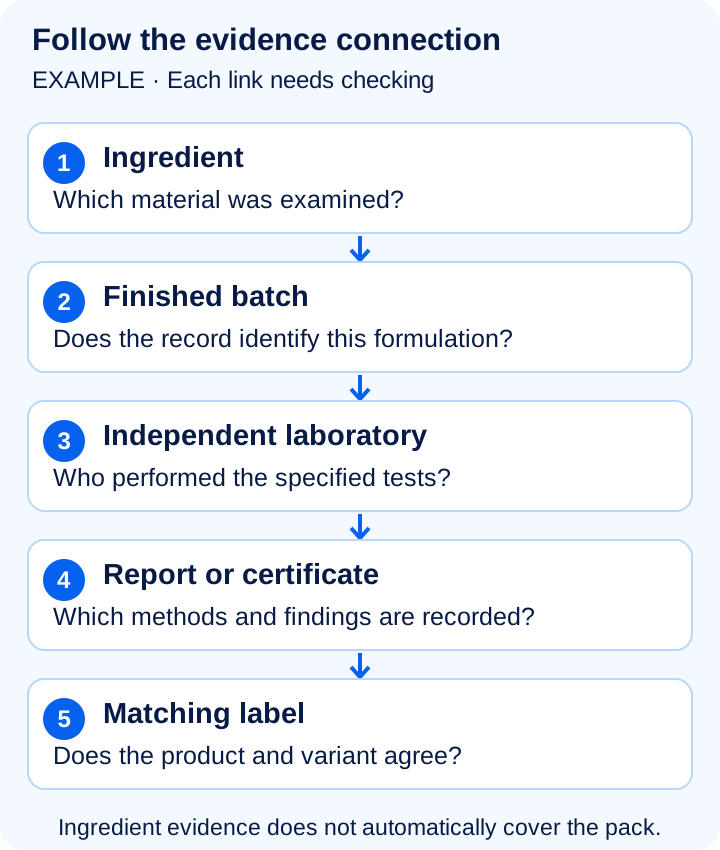
The sample is as important as the test. A raw-material report concerns that raw material. A finished-product report concerns the identified sample of the finished formulation. Before carrying a claim from one to the other, look for a clear explanation of what was tested.
What do Informed Sport and NSF certification cover?
| Programme | What its own information describes | What to check |
|---|---|---|
| Informed Sport | Banned-substance testing of each certified product batch before market release | The exact product, formulation and batch in its searchable records |
| NSF supplement certification | Checks including label contents and specified contaminants, with programme requirements | The precise certification mark and the product's listing |
| NSF Certified for Sport | Additional sport-focused requirements, including banned-substance testing | The applicable programme and current certified-product record |
These descriptions come from the schemes themselves. Informed Sport's FAQ explains its batch-testing approach and distinguishes it from Informed Choice's monitoring schedule. NSF's consumer guidance distinguishes its general supplement certification from Certified for Sport. Do not substitute one programme's scope for another's.
A record for one flavour, formulation or product is not permission to extend the claim across the brand. Match the listed details and check current status through the scheme. Where the record is unclear, leave the certification unconfirmed rather than treating the logo as sufficient evidence.
Inspect Vitamin D products with recorded verification
These live cards use the site's verified-evidence selection. Open each analysis to read the scope and sources behind its testing status.
Review the Vitamin D comparison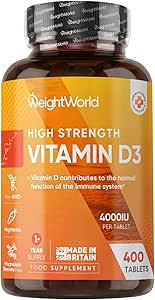

We may earn a commission if you buy through our links. How we stay independent.
How do you check a testing or certification claim?
Name the claim
Write down whether it concerns an ingredient, a finished batch, a manufacturing facility or a named certification. These are different claims and require different supporting records.
Find the original record
Follow the certification body's directory or the laboratory's report-verification route where available. A retailer's cropped badge or summary should not be your only source.
Match the product
Check brand, formulation, format and batch information where the programme provides it. A similar product name is a starting point, not confirmation that the record applies.
Read the limits
Record what was examined and what was not reported. Note dates and current status. If a result is described only as 'pass', look for the criteria attached to that decision.
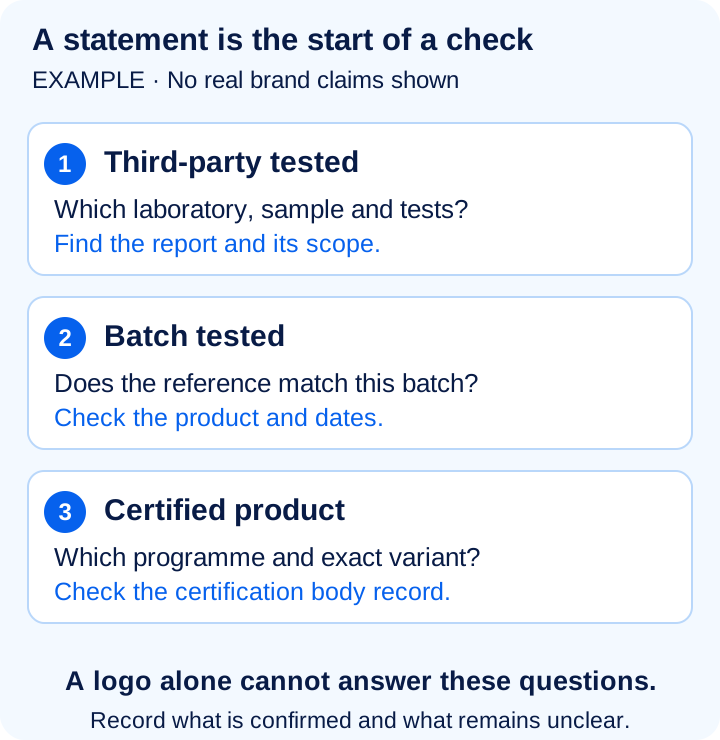
What does a test report not establish?
A composition or contaminant report answers analytical questions. It is not a clinical study and does not establish that a product will deliver a particular outcome for an individual. Certification likewise needs to be read according to its defined scope, not as a general endorsement of every claim on the pack.
Manufacturing-system information is also different from product evidence. A statement about a facility or process should not be relabelled as a batch-specific finding. Conversely, one batch report is not necessarily evidence of an ongoing programme covering future production.
Testing does not assess individual suitability
If you take medicines or need advice about whether a supplement is appropriate for you, speak to a pharmacist or doctor. A testing badge cannot evaluate your circumstances.
How does The Supplement Compare describe testing?
Our testing verification method distinguishes review pending, testing claimed, manufacturer COA, verified independent evidence, recognised certification and no public evidence located. Those descriptions concern the evidence recorded, not a promise that all products have undergone identical examinations.
A pending review is unfinished. 'No public evidence located' does not prove that testing never happened. Our scoring explanation sets out how evidence contributes to the assessment. In the Vitamin D comparison, use the Testing field and product analysis together.
A useful testing check
- Identify the exact claim and programme.
- Match the report or record to the product and batch where relevant.
- Read methods, findings and scope rather than a logo alone.
- Keep manufacturing information separate from product results.
- Record missing information without guessing.
Frequently asked questions
Are supplements tested in the UK?
Supplements sit within food regulation, but that is not a universal independent-certification programme. The evidence available differs between products. Look for the particular report, batch connection or scheme record supporting a claim, rather than assuming that being offered for sale establishes the same testing history for every supplement.
What does independently tested mean?
It generally describes testing performed by an organisation separate from the manufacturer. To understand the claim, identify the laboratory, sample, methods and findings. The phrase alone does not explain what was checked or establish an ongoing certification programme. Read the supporting evidence and the scope attached to it.
Is third-party tested the same as certified?
No. An outside laboratory can test a sample without the product belonging to a certification programme. A certification has its own requirements and defined scope, which may include testing and other checks. Verify the precise programme and product record rather than treating the two descriptions as equivalent.
Can I check a supplement certificate?
Often a scheme provides a searchable product record, while a laboratory may provide report verification. Match the product, formulation and batch where applicable. If no public verification route exists, request clarification from the issuer. Until the connection is established, keep the claim distinct from confirmed evidence.
Does testing make a supplement effective?
Analytical testing can provide evidence about composition or specified contaminants; it does not by itself establish a personal outcome. That requires a different kind of evidence. Read a report for the questions it actually addresses, and do not turn a passing analytical finding into a broader health promise.
Compare products with the evidence visible
Review the Testing field, then open the source details behind the product summary.
We may earn a commission if you buy through our links. How we stay independent.