Displayed points and weights are rounded; the total uses unrounded weights. Pending dimensions are excluded. Provisional scores may change after review.
Testing evidence
Evidence status
Verified independent evidence
Manufacturer statement
Manufacturer page shows a 'CERTIFICATIONS & LAB TESTS' section for this product with 'Heavy Metals Testing' and 'Microbial Contaminants Testing' for batch LC260172, and the linked report is a J.S. Hamilton Baltic test report for 'Alpha 01 - Calcium carbonate, 400mg'.
Displayed points and weights are rounded; the total uses unrounded weights. Pending dimensions are excluded. Provisional scores may change after review.
Testing evidence
Evidence status
Verified independent evidence
Manufacturer statement
Manufacturer page shows a 'CERTIFICATIONS & LAB TESTS' section for this product with 'Heavy Metals Testing' and 'Microbial Contaminants Testing' for batch LC260172, and the linked report is a J.S. Hamilton Baltic test report for 'Alpha 01 - Calcium carbonate, 400mg'.
Displayed points and weights are rounded; the total uses unrounded weights. Pending dimensions are excluded. Provisional scores may change after review.
Testing evidence
Evidence status
Verified independent evidence
Manufacturer statement
Manufacturer page shows a 'CERTIFICATIONS & LAB TESTS' section for this product with 'Heavy Metals Testing' and 'Microbial Contaminants Testing' for batch LC260172, and the linked report is a J.S. Hamilton Baltic test report for 'Alpha 01 - Calcium carbonate, 400mg'.
Compare elemental calcium in mg per labelled daily serving, not compound or tablet weight. Vitamin D, magnesium and other actives are recorded separately. The amount is what the label states, not a dose-adequacy rating. Where directions give a range, the range is shown and daily cost uses the low end (no directions: one unit a day). Read the dose guide ↓
Manufacturer page shows a 'CERTIFICATIONS & LAB TESTS' section for this product with 'Heavy Metals Testing' and 'Microbial Contaminants Testing' for batch LC260172, and the linked report is a J.S. Hamilton Baltic test report for 'Alpha 01 - Calcium carbonate, 400mg'.
Displayed points and weights are rounded; the total uses unrounded weights. Pending dimensions are excluded. Provisional scores may change after review.
Horbaach’s own site says: “Laboratory Tested” and “We constantly source the best ingredients worldwide, test each individual product to ensure it meets our strict Quality Assurance Standards.”
Displayed points and weights are rounded; the total uses unrounded weights. Pending dimensions are excluded. Provisional scores may change after review.
Sunshine Nutrition’s About Us page says: “All inbound raw materials are tested in-house…” and “After blending and bottling, we test the finished goods at our in-house labs to verify that what’s on the label is what’s in the bottle and that our products are free of heavy metals, pesticides, and other contaminants.”
Displayed points and weights are rounded; the total uses unrounded weights. Pending dimensions are excluded. Provisional scores may change after review.
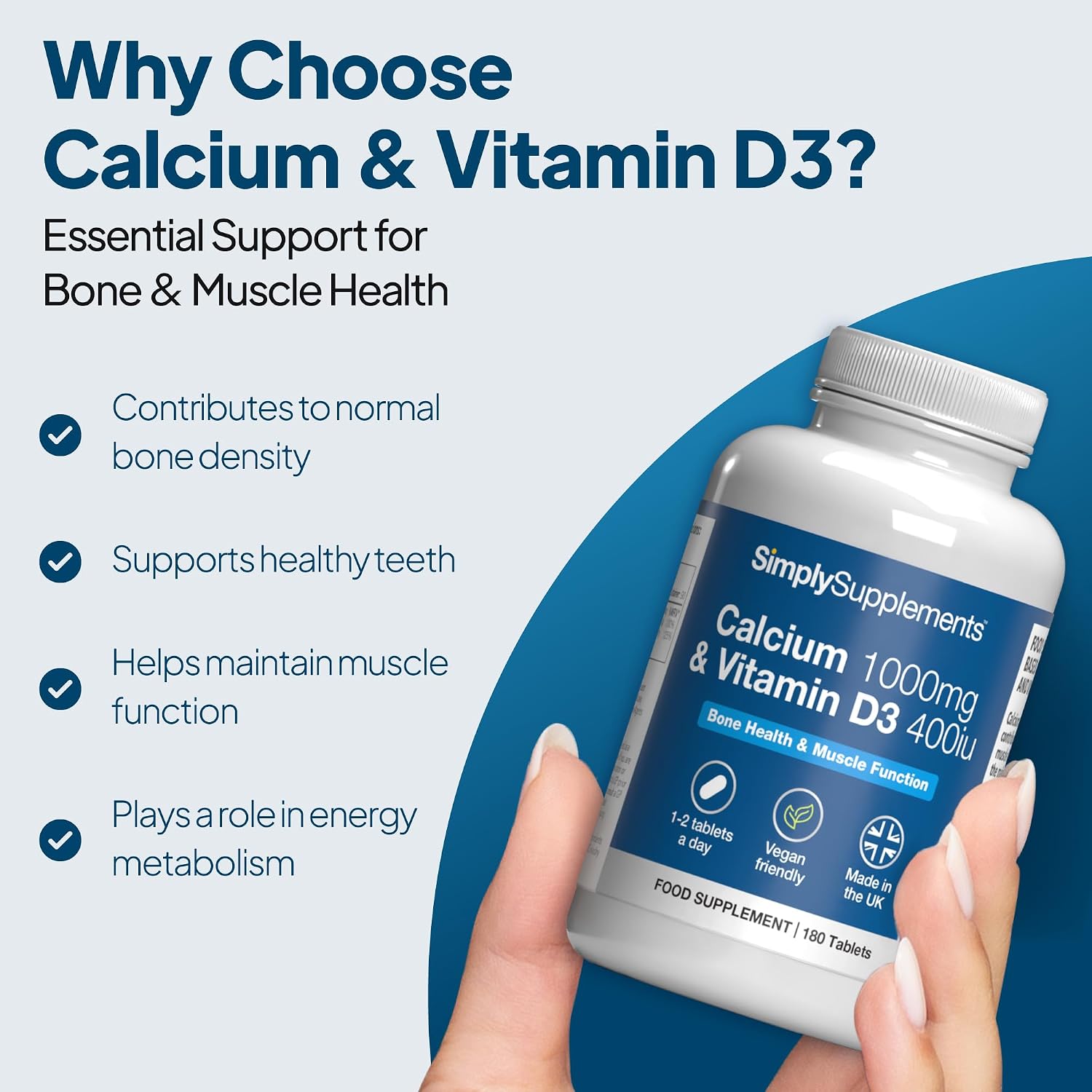
Simply Supplements’ About page says: “Laboratory Tested — We provide certificates of Analysis that validate the purity and level of active ingredients within each product and independently tested.” The product page itself also says only that it is “Manufactured in the UK to GMP standards,” which is not an independent testing/certification claim.
Displayed points and weights are rounded; the total uses unrounded weights. Pending dimensions are excluded. Provisional scores may change after review.
Manufacturer site says: "We put our products to the test, ensuring maximum potency from each formula we produce" and "we ... test each individual product to ensure it meets our strict Quality Assurance Standards."
Displayed points and weights are rounded; the total uses unrounded weights. Pending dimensions are excluded. Provisional scores may change after review.
Lindens’ site says: “We are proud to hold ISO 9001 Certification” and on the About Us page: “British Standards Institution: ISO 9001:2015 Quality Management Systems, (Certificate no. FS 657303).” This is a general quality-system accreditation claim, not a product-specific third-party test/certification for the calcium tablets.
Displayed points and weights are rounded; the total uses unrounded weights. Pending dimensions are excluded. Provisional scores may change after review.
Amazon listing and manufacturer site say the product is 'quality controlled' / 'quality assured' and 'carefully manufactured' and the product page says 'At Oxford Vitality, our Calcium and Vitamin D tablets...' but I did not find any independently verifiable third-party test report or certification for this specific product. The manufacturer also says on its product page: 'At Oxford Vitality, our Calcium and Vitamin D tablets contain Vitamin D3...' and on the Amazon listing: 'TRUSTED UK QUALITY: Our products are expertly manufactured and packed in the UK using carefully selected ingredients and quality controlled processes.'
Displayed points and weights are rounded; the total uses unrounded weights. Pending dimensions are excluded. Provisional scores may change after review.
Amazon listing image/text shows the product is described as "Lab Tested"; NutriVolv product pages also show generic quality claims like "GMP" and "Non-GMO" but no independently verifiable COA or third-party registry entry was found for this specific calcium + vitamin D3 product.
Displayed points and weights are rounded; the total uses unrounded weights. Pending dimensions are excluded. Provisional scores may change after review.
Amazon listing and Zipvit product page both claim the product is "3rd Party Tested" / "independently tested for heavy metals" and the Zipvit product page also says "INDEPENDENTLY LAB-TESTED" and "SEE LAB RESULTS," but I did not find an actual COA/lab report or a certifying-body registry page confirming this specific product.
Displayed points and weights are rounded; the total uses unrounded weights. Pending dimensions are excluded. Provisional scores may change after review.
Amazon listing/product images explicitly say 'Geprüfte Qualität / Certified Quality' and 'Die Vitamaze Calcium Tabletten wurden von einem führenden deutschen Analyseinstitut geprüft' (the image also shows a GBA-branded analysis document), but I could not independently verify a product-specific certificate or registry entry from the certifying/testing body itself.
Displayed points and weights are rounded; the total uses unrounded weights. Pending dimensions are excluded. Provisional scores may change after review.
Manufacturer site says: "To ensure the highest safety and quality, our products undergo rigorous testing for heavy metals and unwanted compounds during production" and Amazon listing says: "SAFETY & QUALITY - To uphold the highest standards of safety and quality, our products undergo post-production testing for heavy metals and other ..."
Displayed points and weights are rounded; the total uses unrounded weights. Pending dimensions are excluded. Provisional scores may change after review.
Zenement’s product/collection pages market the product with claims like “Seal of Quality,” “strictest quality controls,” and the Amazon listing image says “Analyses certified by external laboratories,” but I did not find a public COA, lab report, or certifying-body registry entry for this specific product.
Displayed points and weights are rounded; the total uses unrounded weights. Pending dimensions are excluded. Provisional scores may change after review.
Neo Nutrition’s own ‘Our Process’ page says: ‘Every ingredient and finished product undergoes rigorous quality testing in our state-of-the-art laboratory. We test for purity, potency, and safety to ensure our products meet the highest standards.’
Displayed points and weights are rounded; the total uses unrounded weights. Pending dimensions are excluded. Provisional scores may change after review.
Manufacturer page says: "To ensure that all products meet the highest standards, our raw materials are scientifically tested before use, and every formula is tested to confirm its quality." Product sheet for Calcium (citrate) says only "Made with high-quality ingredients backed by verifiable science" and gives no product-specific third-party certificate or lab report for this item.
Displayed points and weights are rounded; the total uses unrounded weights. Pending dimensions are excluded. Provisional scores may change after review.
Displayed points and weights are rounded; the total uses unrounded weights. Pending dimensions are excluded. Provisional scores may change after review.
Manufacturer site says: "We source our own raw materials and triple-test every lot" and "15,000 tests per month verify ingredient potency and purity"; product page also says the facility is "certified by NSF" and that Solaray conducts testing in its ISO-accredited lab.
Displayed points and weights are rounded; the total uses unrounded weights. Pending dimensions are excluded. Provisional scores may change after review.
Manufacturer site says the product is "Third party tested for quality assurance" and the page also states "Our True Food standards ... Third party tested".
Displayed points and weights are rounded; the total uses unrounded weights. Pending dimensions are excluded. Provisional scores may change after review.
Manufacturer site says: "All raw materials and finished products are independently tested for purity and potency by our third-party laboratories" and the product page says the product is "made with high-quality ingredients backed by verifiable science."
Displayed points and weights are rounded; the total uses unrounded weights. Pending dimensions are excluded. Provisional scores may change after review.
Displayed points and weights are rounded; the total uses unrounded weights. Pending dimensions are excluded. Provisional scores may change after review.
Displayed points and weights are rounded; the total uses unrounded weights. Pending dimensions are excluded. Provisional scores may change after review.
Displayed points and weights are rounded; the total uses unrounded weights. Pending dimensions are excluded. Provisional scores may change after review.
Displayed points and weights are rounded; the total uses unrounded weights. Pending dimensions are excluded. Provisional scores may change after review.
Displayed points and weights are rounded; the total uses unrounded weights. Pending dimensions are excluded. Provisional scores may change after review.
Displayed points and weights are rounded; the total uses unrounded weights. Pending dimensions are excluded. Provisional scores may change after review.
Displayed points and weights are rounded; the total uses unrounded weights. Pending dimensions are excluded. Provisional scores may change after review.
Displayed points and weights are rounded; the total uses unrounded weights. Pending dimensions are excluded. Provisional scores may change after review.
Manufacturer page shows a 'CERTIFICATIONS & LAB TESTS' section for this product with 'Heavy Metals Testing' and 'Microbial Contaminants Testing' for batch LC260172, and the linked report is a J.S. Hamilton Baltic test report for 'Alpha 01 - Calcium carbonate, 400mg'.
Displayed points and weights are rounded; the total uses unrounded weights. Pending dimensions are excluded. Provisional scores may change after review.
Horbaach’s own site says: “Laboratory Tested” and “We constantly source the best ingredients worldwide, test each individual product to ensure it meets our strict Quality Assurance Standards.”
Displayed points and weights are rounded; the total uses unrounded weights. Pending dimensions are excluded. Provisional scores may change after review.
Sunshine Nutrition’s About Us page says: “All inbound raw materials are tested in-house…” and “After blending and bottling, we test the finished goods at our in-house labs to verify that what’s on the label is what’s in the bottle and that our products are free of heavy metals, pesticides, and other contaminants.”
Displayed points and weights are rounded; the total uses unrounded weights. Pending dimensions are excluded. Provisional scores may change after review.
Simply Supplements’ About page says: “Laboratory Tested — We provide certificates of Analysis that validate the purity and level of active ingredients within each product and independently tested.” The product page itself also says only that it is “Manufactured in the UK to GMP standards,” which is not an independent testing/certification claim.
Displayed points and weights are rounded; the total uses unrounded weights. Pending dimensions are excluded. Provisional scores may change after review.
Manufacturer site says: "We put our products to the test, ensuring maximum potency from each formula we produce" and "we ... test each individual product to ensure it meets our strict Quality Assurance Standards."
Displayed points and weights are rounded; the total uses unrounded weights. Pending dimensions are excluded. Provisional scores may change after review.
Lindens’ site says: “We are proud to hold ISO 9001 Certification” and on the About Us page: “British Standards Institution: ISO 9001:2015 Quality Management Systems, (Certificate no. FS 657303).” This is a general quality-system accreditation claim, not a product-specific third-party test/certification for the calcium tablets.
Displayed points and weights are rounded; the total uses unrounded weights. Pending dimensions are excluded. Provisional scores may change after review.
Amazon listing and manufacturer site say the product is 'quality controlled' / 'quality assured' and 'carefully manufactured' and the product page says 'At Oxford Vitality, our Calcium and Vitamin D tablets...' but I did not find any independently verifiable third-party test report or certification for this specific product. The manufacturer also says on its product page: 'At Oxford Vitality, our Calcium and Vitamin D tablets contain Vitamin D3...' and on the Amazon listing: 'TRUSTED UK QUALITY: Our products are expertly manufactured and packed in the UK using carefully selected ingredients and quality controlled processes.'
Displayed points and weights are rounded; the total uses unrounded weights. Pending dimensions are excluded. Provisional scores may change after review.
Amazon listing image/text shows the product is described as "Lab Tested"; NutriVolv product pages also show generic quality claims like "GMP" and "Non-GMO" but no independently verifiable COA or third-party registry entry was found for this specific calcium + vitamin D3 product.
Displayed points and weights are rounded; the total uses unrounded weights. Pending dimensions are excluded. Provisional scores may change after review.
Amazon listing and Zipvit product page both claim the product is "3rd Party Tested" / "independently tested for heavy metals" and the Zipvit product page also says "INDEPENDENTLY LAB-TESTED" and "SEE LAB RESULTS," but I did not find an actual COA/lab report or a certifying-body registry page confirming this specific product.
Displayed points and weights are rounded; the total uses unrounded weights. Pending dimensions are excluded. Provisional scores may change after review.
Amazon listing/product images explicitly say 'Geprüfte Qualität / Certified Quality' and 'Die Vitamaze Calcium Tabletten wurden von einem führenden deutschen Analyseinstitut geprüft' (the image also shows a GBA-branded analysis document), but I could not independently verify a product-specific certificate or registry entry from the certifying/testing body itself.
Displayed points and weights are rounded; the total uses unrounded weights. Pending dimensions are excluded. Provisional scores may change after review.
Manufacturer site says: "To ensure the highest safety and quality, our products undergo rigorous testing for heavy metals and unwanted compounds during production" and Amazon listing says: "SAFETY & QUALITY - To uphold the highest standards of safety and quality, our products undergo post-production testing for heavy metals and other ..."
Displayed points and weights are rounded; the total uses unrounded weights. Pending dimensions are excluded. Provisional scores may change after review.
Zenement’s product/collection pages market the product with claims like “Seal of Quality,” “strictest quality controls,” and the Amazon listing image says “Analyses certified by external laboratories,” but I did not find a public COA, lab report, or certifying-body registry entry for this specific product.
Displayed points and weights are rounded; the total uses unrounded weights. Pending dimensions are excluded. Provisional scores may change after review.
Neo Nutrition’s own ‘Our Process’ page says: ‘Every ingredient and finished product undergoes rigorous quality testing in our state-of-the-art laboratory. We test for purity, potency, and safety to ensure our products meet the highest standards.’
Displayed points and weights are rounded; the total uses unrounded weights. Pending dimensions are excluded. Provisional scores may change after review.
Manufacturer page says: "To ensure that all products meet the highest standards, our raw materials are scientifically tested before use, and every formula is tested to confirm its quality." Product sheet for Calcium (citrate) says only "Made with high-quality ingredients backed by verifiable science" and gives no product-specific third-party certificate or lab report for this item.
Displayed points and weights are rounded; the total uses unrounded weights. Pending dimensions are excluded. Provisional scores may change after review.
Displayed points and weights are rounded; the total uses unrounded weights. Pending dimensions are excluded. Provisional scores may change after review.
Calcium form
Mixed formsCalcium + DCapsuleCalcium citrate and calcium carbonate
Manufacturer site says: "We source our own raw materials and triple-test every lot" and "15,000 tests per month verify ingredient potency and purity"; product page also says the facility is "certified by NSF" and that Solaray conducts testing in its ISO-accredited lab.
Displayed points and weights are rounded; the total uses unrounded weights. Pending dimensions are excluded. Provisional scores may change after review.
Manufacturer site says the product is "Third party tested for quality assurance" and the page also states "Our True Food standards ... Third party tested".
Displayed points and weights are rounded; the total uses unrounded weights. Pending dimensions are excluded. Provisional scores may change after review.
Manufacturer site says: "All raw materials and finished products are independently tested for purity and potency by our third-party laboratories" and the product page says the product is "made with high-quality ingredients backed by verifiable science."
Displayed points and weights are rounded; the total uses unrounded weights. Pending dimensions are excluded. Provisional scores may change after review.
Displayed points and weights are rounded; the total uses unrounded weights. Pending dimensions are excluded. Provisional scores may change after review.
Displayed points and weights are rounded; the total uses unrounded weights. Pending dimensions are excluded. Provisional scores may change after review.
Displayed points and weights are rounded; the total uses unrounded weights. Pending dimensions are excluded. Provisional scores may change after review.
Displayed points and weights are rounded; the total uses unrounded weights. Pending dimensions are excluded. Provisional scores may change after review.
Displayed points and weights are rounded; the total uses unrounded weights. Pending dimensions are excluded. Provisional scores may change after review.
Displayed points and weights are rounded; the total uses unrounded weights. Pending dimensions are excluded. Provisional scores may change after review.
One-time purchase prices; delivery and conditional discounts excluded. Daily cost uses the recorded label serving. Comparison amounts are not personal dose recommendations. Unknown Prime eligibility is not treated as confirmed.
Calcium forms and labels explained
Calcium salts differ in elemental-calcium density and how dependent their absorption is on stomach acid. Compare the label-declared elemental calcium first, then use the form to understand practical differences rather than treating the compound name as a quality score.
Calcium carbonate
Common high-density calcium salt
Elemental fraction
About 40{3683f0b818e4e7eac3a25ad8212965194ab09621a23bd0189e97e17dfedff11f} by weight
Food context
Best taken with a meal
Higher elemental density can reduce compound mass, but it does not prove better clinical outcomes.
Calcium citrate
Less stomach-acid dependent
Elemental fraction
About 21{3683f0b818e4e7eac3a25ad8212965194ab09621a23bd0189e97e17dfedff11f} by weight
Food context
Can be taken without food
Often shows higher measured absorption than carbonate, but that is not a universal outcome advantage.
Other calcium salts
Several permitted mineral sources
Examples
Citrate malate, lactate, gluconate, phosphate
Compare
Elemental calcium
A less-common chemical name does not justify a higher score without relevant evidence.
Calcium plus vitamin D
Combination formula
Calcium
Record elemental mg
Vitamin D
Record separately
Do not merge vitamin D or other minerals into the calcium dose or calcium-form score.
Calcium dose: UK RNI, label NRV and supplement context
UK adults have a calcium Reference Nutrient Intake of 700 mg/day. [1][2] This is a total dietary requirement, not a recommendation to take a 700 mg supplement.
UK labels use an adult calcium Nutrient Reference Value of 800 mg. [3] The NRV explains label percentages and should not replace the 700 mg RNI in guidance.
The NHS says taking 1,500 mg/day or less from calcium supplements is unlikely to cause harm, while higher supplemental doses can cause stomach pain and diarrhoea. [1] The UK Expert Group on Vitamins and Minerals did not set a formal calcium TUL; its 1,500 mg/day figure was guidance for supplemental intake. [4] Compare the product's elemental calcium, but do not treat 700, 800 or 1,500 mg as a universal supplement target.
What the calcium evidence shows
Calcium is essential for bone structure and normal physiological functions, but more supplemental calcium does not automatically mean better outcomes. A 2026 systematic review of 69 randomised trials found little to no clinically important fracture or fall benefit from calcium, vitamin D or combined supplementation across predominantly community-dwelling populations. [6] That finding does not replace treatment guidance for people with osteoporosis, deficiency or another diagnosed condition.
Safety evidence also needs context. The Women's Health Initiative found more reported urinary-tract stones in women assigned 1,000 mg/day calcium carbonate plus vitamin D than placebo. [7] Cardiovascular meta-analyses have reached conflicting conclusions, so the evidence does not support a simple claim that calcium supplements either cause or prevent cardiovascular disease. [8][9]
Calcium evidence by goal
Evidence by goal
Goal
Evidence strength
What was assessed
Typical study context
Main limitation
Meeting an adult calcium requirement
Established nutritional requirement; supplement need is individual
Total calcium intake from diet and supplements
UK adult RNI is 700 mg/day.
The RNI is not a recommendation to obtain 700 mg from a supplement.
Routine fracture prevention in community-dwelling adults
Little to no clinically important benefit overall
Calcium, vitamin D or combined supplementation
2026 review: 69 randomised trials, 153,902 participants; most were community-dwelling and not high fracture risk.
Does not address individualized treatment of osteoporosis, deficiency or institutionalized high-risk populations.
Choosing citrate rather than carbonate
Moderate practical/absorption distinction; no universal clinical winner
Calcium citrate and calcium carbonate
Citrate is less dependent on stomach acid; carbonate is meal-dependent and more elementally dense.
Absorption differences do not prove superior long-term outcomes for every product.
Understanding kidney-stone risk
Signal in a major combined-supplement trial
1,000 mg/day calcium carbonate plus vitamin D3
WHI, 36,282 postmenopausal women, mean 7 years.
Combined regimen and specific population; does not justify restricting normal dietary calcium.
Read the full evidence-by-goal detail
Meeting calcium requirements
Calcium supplements can add elemental calcium when dietary intake is insufficient, but the UK RNI refers to total intake rather than the amount that should come from a bottle. [2]
Bone and fracture prevention
Calcium is required for normal bone health, but routine supplementation has not consistently reduced fractures in generally community-dwelling adults. [6]
Choosing carbonate or citrate
Calcium citrate is less dependent on stomach acid, while carbonate is best taken with food. Carbonate also contains a higher proportion of elemental calcium by compound weight. [5] These practical differences do not prove that every citrate product produces better long-term health outcomes.
When to take calcium
Timing depends partly on the calcium form. Calcium carbonate is more dependent on stomach acid and is generally better taken with a meal; calcium citrate is less acid-dependent and can be taken without food. [5]
Calcium absorption becomes proportionally lower as a single elemental dose gets larger; NIH notes the highest fractional absorption at doses of about 500 mg or less at one time. [5] Treat this as absorption context rather than a universal daily-dose rule.
Calcium also interacts with some medicines. NHS lists calcium supplements among products that may interfere with levothyroxine. [15] Follow the medicine label, pharmacist or prescriber's instructions rather than applying one generic separation interval to every medicine.
Calcium safety, kidneys and medicine interactions
Who should be cautious?If any of the following apply to you, speak to a healthcare professional before taking Calcium - see the full detail below for why.
People with chronic kidney disease or known abnormal blood calcium
People with recurrent kidney stones or a history of calcium-containing stones
People with hyperparathyroidism or another disorder affecting calcium regulation
People taking levothyroxine or other medicines known to interact with calcium
People already taking several calcium-containing products, including antacids or combination supplements
The NHS says supplemental calcium above 1,500 mg/day can cause stomach pain and diarrhoea and describes 1,500 mg/day or less from supplements as unlikely to cause harm. [1] This is not a formal TUL or a target intake.
Kidney-stone risk needs careful wording. In the Women's Health Initiative, a combined regimen of 1,000 mg calcium carbonate plus vitamin D increased reported urinary-tract stones compared with placebo. [7] This does not mean people prone to calcium-oxalate stones should simply restrict calcium foods; NHS stone guidance warns that severe dietary calcium restriction can increase urinary oxalate and advises individual guidance on supplements. [16]
Calcium can also interact with medicines, including levothyroxine and certain other drugs. [5][15] People with kidney disease, recurrent stones, known high blood calcium, parathyroid disorders or relevant prescription medicines should seek clinician or pharmacist advice before high-dose supplementation.
Calcium with vitamin D and other minerals
Calcium is often combined with vitamin D, magnesium or zinc. Compare each nutrient separately: the calcium figure should represent elemental calcium, while vitamin D and other minerals keep their own amount, form and safety context. A combined formula does not prove that everyone needs every included nutrient.
Current UK food-supplement guidance says supplements are intended to supplement the normal diet and should not be sold as treatments for disease. [10]
Who might consider a calcium supplement
A calcium supplement can be relevant when a person's diet does not reliably provide enough calcium, but the appropriate amount depends on total dietary intake and individual circumstances. The NHS says most adults should be able to obtain the calcium they need through diet. [1]
People using calcium because of osteoporosis, low blood calcium, kidney disease, recurrent stones or a medicine-related reason are outside a simple retail-comparison decision and should use clinical advice.
How to compare calcium testing evidence
For calcium, meaningful testing evidence should confirm the elemental calcium potency of the finished product, identify the calcium source and show what contaminants or other quality attributes were assessed. In combination products, check whether vitamin D and other declared actives were also within the report's scope.
A legal food-supplement label is not the same as independent batch verification. [10] The Supplement Compare's testing guide separates marketing claims, manufacturer COAs, independent evidence and recognised certification. Read the guide Testing can support identity and potency; it does not prove fracture prevention or personal suitability.
Blood testing & your results
A routine serum calcium result is not a direct measure of dietary calcium intake or body calcium stores. Serum calcium is tightly regulated, and NIH notes that total serum/plasma calcium is not a good reflection of nutritional calcium status. [5] Blood calcium testing is clinically useful when a clinician is investigating abnormal calcium physiology, kidney/parathyroid problems or related conditions, but this comparison page should not recommend routine screening simply to choose a supplement.
Testing evidence in this comparison
A testing claim is not the same as a verified report. No public evidence located does not mean a product has not been tested.
Testing review pending0
Recognised certification0
Verified independent evidence1
Manufacturer COA0
Testing claimed16
No public evidence located8
What does calcium cost?
Current UK comparison set, based on the daily serving shown on each label.
£0.05Lowest daily cost
£0.16Median daily cost
£1.23Highest daily cost
Your questions, answered
How much calcium do adults need in the UK?
The UK adult RNI is 700 mg/day from total intake. [1][2] The 800 mg figure shown as an NRV on labels is a labelling reference, not a different personal requirement. [3]
Is calcium citrate better than calcium carbonate?
Not universally. Citrate is less dependent on stomach acid and can be taken without food; carbonate is more elementally dense and is better taken with a meal. [5] These differences do not prove that every citrate product gives better health outcomes.
What does elemental calcium mean?
Elemental calcium is the actual amount of calcium supplied, separate from the total weight of the calcium compound. Calcium carbonate is about 40{3683f0b818e4e7eac3a25ad8212965194ab09621a23bd0189e97e17dfedff11f} elemental calcium by weight and citrate about 21{3683f0b818e4e7eac3a25ad8212965194ab09621a23bd0189e97e17dfedff11f}, so compare the label-declared calcium amount rather than compound mass. [5]
Can calcium supplements cause kidney stones?
Some evidence raises concern. In the WHI, 1,000 mg/day calcium carbonate plus vitamin D increased reported urinary-tract stones compared with placebo. [7] The finding was for a combined regimen in postmenopausal women and should not be turned into advice to restrict normal dietary calcium.
Does a calcium blood test show whether I eat enough calcium?
Not reliably. Serum calcium is tightly regulated and is not a good reflection of nutritional calcium status. [5] A clinician may order calcium tests for medical reasons, but this page does not recommend routine testing for supplement selection.